Fairhope and Atmore
Phone (251) 928-6768




Have your child's feet been examined lately? Healthy feet are happy feet. If your child is complaining of foot pain, it may be a sign of underlying problems.
 Rheumatoid arthritis (RA) is an autoimmune disease that causes the body’s immune system to attack otherwise healthy cells in the lining of the joints. The joints become inflamed, leading to pain, swelling, stiffness, redness, and warmth. RA frequently affects the small joints of the feet and the ankle joints. Many foot conditions are related to RA, including dislocated toe joints, hammertoes, bunions, heel pain, Achilles tendonitis, flat foot, and ankle pain. People with RA can also develop rheumatoid nodules, lumps on the feet that can cause pain while walking or when they rub against the shoes. If you have RA, a podiatrist can help you manage this condition and maintain the proper health of your feet.
Because RA affects more than just your joints, including the joints in your feet and ankles, it is important to seek early diagnosis from your podiatrist if you feel like the pain in your feet might be caused by RA. For more information, contact Brent Harwood, DPM of Southeast Podiatry. Our doctor will assist you with all of your podiatric concerns.
What Is Rheumatoid Arthritis?
Rheumatoid Arthritis (RA) is an autoimmune disorder in which the body’s own immune system attacks the membranes surrounding the joints. Inflammation of the lining and eventually the destruction of the joint’s cartilage and bone occur, causing severe pain and immobility.
Rheumatoid Arthritis of the Feet
Although RA usually attacks multiple bones and joints throughout the entire body, almost 90 percent of cases result in pain in the foot or ankle area.
Symptoms
Diagnosis
Quick diagnosis of RA in the feet is important so that the podiatrist can treat the area effectively. Your doctor will ask you about your medical history, occupation, and lifestyle to determine the origin of the condition. Rheumatoid Factor tests help to determine if someone is affected by the disease.
If you have any questions please feel free to contact one of our offices located in Fairhope, Brewton, and Atmore, AL . We offer the newest diagnostic and treatment technologies for all your foot and ankle needs.

Your feet are covered most of the day. If you're diabetic, periodic screening is important for good health. Numbness is often a sign of diabetic foot and can mask a sore or wound.
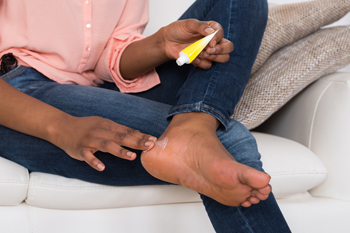 Cracked heels are not only unattractive, but they can be uncomfortable and painful as well. If cracks are allowed to deepen, they may even bleed or become infected. Cracked heels can worsen in the summertime due to dehydration, so make sure you drink plenty of water. You can try to soften your cracked heels overnight by applying petroleum jelly or a thick cream at bedtime and sleep with socks on which will help lock moisture in. Because air, dirt, and other pollutants can dry out and roughen skin, limit wearing open-backed shoes and do not walk barefoot. Some believe that soaking your feet in paraffin wax—a natural emollient—can help loosen skin and remove dead skin cells to help soften heels. For professional tips on prevention, or to get treatment for deep, bleeding, or painful cracked heels, make an appointment with a podiatrist.
If the skin on your feet starts to crack, you may want to see a podiatrist to find treatment. If you have any concerns, contact Brent Harwood, DPM from Southeast Podiatry. Our doctor can provide the care you need to keep you pain-free and on your feet.
Cracked Heels
It is important to moisturize your cracked heels in order to prevent pain, bleeding, and infection. The reason cracked heels form is because the skin on the foot is too dry to support the immense pressure placed on them. When the foot expands, the dry skin on the foot begins to split.
Ways to Help Heal Them
Ways to Prevent Cracked Heels
If you are unsure how to proceed in treating cracked heels, seek guidance from a podiatrist. Your doctor will help you with any questions or information you may need.
If you have any questions, please feel free to contact one of our offices located in Fairhope, Brewton, and Atmore, AL . We offer the newest diagnostic and treatment technologies for all your foot care needs.
Read more about Solutions for Cracked Heels
Custom orthotics, or shoe inserts, should be periodically replaced. Orthotics must fit properly to give you the best results. Protect your feet and ankles!
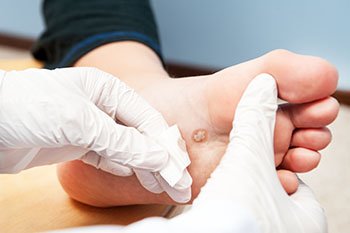
Warts are growths on the skin caused by the human papillomavirus (HPV). They can occur in various areas of the body and are spread through direct contact or indirectly through contact with a surface or object that has previously been in contact with a wart. Plantar warts are flat, hard, and rough growths that develop on the bottom surface (plantar) of the foot. They are brown or gray, with tiny black dots in the center, which are actually blood vessels that nourish the wart with oxygen and nutrients. Plantar warts can be individual or grow in clusters. They are typically tender and can be quite painful while walking and standing. While they may go away on their own, it can take years to completely rid yourself of them. If you have one or more plantar warts that are causing you discomfort, contact a podiatrist who has a variety of treatment options to remove the wart.
Plantar warts can be very uncomfortable. If you need your feet checked, contact Brent Harwood, DPM from Southeast Podiatry. Our doctor will assist you with all of your foot care needs.
About Plantar Warts
Plantar warts are the result of HPV, or human papillomavirus, getting into open wounds on the feet. They are mostly found on the heels or balls of the feet.
While plantar warts are generally harmless, those experiencing excessive pain or those suffering from diabetes or a compromised immune system require immediate medical care. Plantar warts are easily diagnosed, usually through scraping off a bit of rough skin or by getting a biopsy.
Symptoms
Treatment
To help prevent developing plantar warts, avoid walking barefoot over abrasive surfaces that can cause cuts or wounds for HPV to get into. Avoiding direct contact with other warts, as well as not picking or rubbing existing warts, can help prevent the further spread of plantar warts. However, if you think you have developed plantar warts, speak to your podiatrist. He or she can diagnose the warts on your feet and recommend the appropriate treatment options.
If you have any questions please feel free to contact one of our offices located in Fairhope, Brewton, and Atmore, AL . We offer the newest diagnostic and treatment technologies for all your foot care needs.
Read more about What Are Plantar Warts?
Suffering from this type of pain? You may have the foot condition known as Morton's neuroma. Morton's neuroma may develop as a result of ill-fitting footwear and existing foot deformities. We can help.
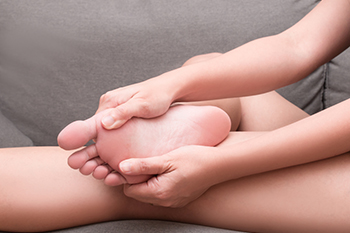
Sesamoiditis is a foot condition in which the sesamoid bones, located in the ball of the foot just beneath the big toe, become injured or inflamed. If you have sesamoiditis, it is very important that you rest the affected foot, however, this can be somewhat difficult without proper planning. To give your foot time to heal, you will likely need to avoid putting pressure and weight on the foot as much as possible. In the early stages of healing, when the sesamoids and surrounding areas are inflamed, it may help to also avoid bending the toes. Do simple stretches and strengthening exercises to maintain your mobility. Good mobility can help keep excess pressure off of your sesamoids when you walk. Finally, wearing the right shoes can be very helpful during the healing process. Choose shoes with a wide toe box and without high heels. A podiatrist may also suggest orthotics. If you have sesamoiditis, please consult with your local podiatrist.
Sesamoiditis is an unpleasant foot condition characterized by pain in the balls of the feet. If you think you’re struggling with sesamoiditis, contact Brent Harwood, DPM of Southeast Podiatry. Our doctor will treat your condition thoroughly and effectively.
Sesamoiditis
Sesamoiditis is a condition of the foot that affects the ball of the foot. It is more common in younger people than it is in older people. It can also occur with people who have begun a new exercise program, since their bodies are adjusting to the new physical regimen. Pain may also be caused by the inflammation of tendons surrounding the bones. It is important to seek treatment in its early stages because if you ignore the pain, this condition can lead to more serious problems such as severe irritation and bone fractures.
Causes of Sesamoiditis
Treatment for sesamoiditis is non-invasive and simple. Doctors may recommend a strict rest period where the patient forgoes most physical activity. This will help give the patient time to heal their feet through limited activity. For serious cases, it is best to speak with your doctor to determine a treatment option that will help your specific needs.
If you have any questions please feel free to contact one of our offices located in Fairhope, Brewton, and Atmore, AL . We offer the newest diagnostic and treatment technologies for all your foot care needs.
Read more about Sesamoiditis
Do you suffer from heel pain when you get up in the morning? If so, you should seek the professional help of your podiatrist and have a proper diagnosis performed. Heel pain can be caused by several different foot-related conditions.
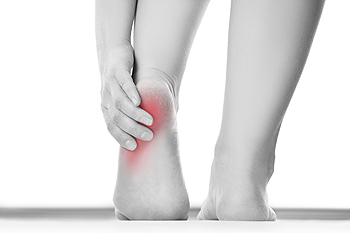
There are different conditions that cause stiffness or pain in your heel that gets worse in the morning. Pain from conditions such as plantar fasciitis—where the long band of tissue on the bottom of the foot becomes inflamed—can be worse in the morning because blood supply to the feet is reduced while you sleep. Similarly, an inflammation of the tissue that connects the heel bone with the calf muscles (Achilles tendinitis) can also be more painful upon waking. This can also be caused by poor circulation, or the fact that calf muscles are shortened while at rest and may become painful when they are stretched as you take your first steps. Unlike plantar fasciitis, however, heel pain from Achilles tendinitis typically does not subside after moving around and warming up the heel. If you have any pain in your heel, seek the care of a podiatrist to determine its cause and the best course of treatment.
Many people suffer from bouts of heel pain. For more information, contact Brent Harwood, DPM of Southeast Podiatry. Our doctor can provide the care you need to keep you pain-free and on your feet.
Causes of Heel Pain
Heel pain is often associated with plantar fasciitis. The plantar fascia is a band of tissues that extends along the bottom of the foot. A rip or tear in this ligament can cause inflammation of the tissue.
Achilles tendonitis is another cause of heel pain. Inflammation of the Achilles tendon will cause pain from fractures and muscle tearing. Lack of flexibility is also another symptom.
Heel spurs are another cause of pain. When the tissues of the plantar fascia undergo a great deal of stress, it can lead to ligament separation from the heel bone, causing heel spurs.
Why Might Heel Pain Occur?
Treatments
Heel pain should be treated as soon as possible for immediate results. Keeping your feet in a stress-free environment will help. If you suffer from Achilles tendonitis or plantar fasciitis, applying ice will reduce the swelling. Stretching before an exercise like running will help the muscles. Using all these tips will help make heel pain a condition of the past.
If you have any questions please contact one of our offices located in Fairhope, Brewton, and Atmore, AL . We offer the newest diagnostic and treatment technologies for all your foot care needs.
Read more about Heel Pain
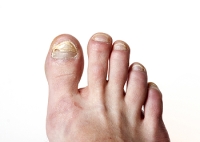
You don't need an excuse to have beautiful nails. Step outside without worrying about the appearance of your feet.
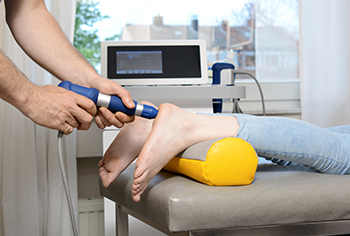
Although the term “shockwave therapy” may sound a little off putting, the science behind it has been used for decades in effective, sound wave treatment for kidney stones (Shockwave Lithotripsy). In soft tissue repair, Extracorporeal Shockwave Therapy (ESWT) has been FDA approved for treating plantar fasciitis—a leading cause of heel pain. ESWT uses high-energy acoustic sound wave impulses to break up scar tissue, reduce pain, and stimulate healing in the damaged and inflamed plantar fascia tissues. ESWT is non-invasive, safe, and effective. If you have persistent pain in your heels, contact a podiatrist for an examination and diagnosis, and to explore whether ESWT may be an option for you.
Shockwave therapy is a treatment commonly used to treat various injuries and conditions, particularly plantar fasciitis in the feet. To learn more, consult with Brent Harwood, DPM from Southeast Podiatry. Our doctor can provide the care you need to keep you pain-free and on your feet.
Shockwave Therapy
Shockwave therapy is a new treatment option designed to treat bone conditions such as tennis elbow, shoulder pain, and others. Shockwave therapy uses high intensity sound waves that are directed to the affected tissues of the body with pinpoint accuracy. The effects are very beneficial, leading to a production of collagen fibers, eliminating inflammation.
Who Benefits from Shockwave?
Shockwave is recommended for patients suffering from heel pain and associated problems. Heel pain is a common condition which can be caused by obesity, overexertion, and spending a substantial amount of time on hard floors with your feet exposed and unsupported.
Fast and Easy
The therapy is actually a simple process that can leave patients feeling better the very next day. Shockwave therapy is not as dramatic as it sounds. It enables more blood flow to effected areas, addressing the source of the problem and allowing treatment to last for a long time.
Treatment & Recovery Time
Shockwave treatment will enable your feet to recover quickly. This is especially important since surgery is not required. It is cost effective and does not require the use of anesthesia. This treatment is a better option to surgery, since it is proven safe.
If you have any questions, please feel free to contact one of our offices located in Fairhope, Brewton, and Atmore, AL . We offer the newest diagnostic and treatment technologies for all your foot care needs.
Read more about Shockwave Therapy
Have your child's feet been examined lately? Healthy feet are happy feet. If your child is complaining of foot pain, it may be a sign of underlying problems.
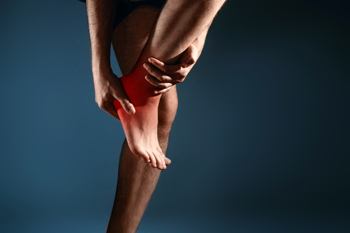 Many people experience foot pain, which can make it difficult to complete daily activities. Foot pain can develop due to a multitude of reasons including blisters, bunions, athlete’s foot, and plantar fasciitis, to name a few. A bunion is defined as a bony protrusion on the side of the big toe and can be caused by wearing shoes that do not fit correctly. Plantar fasciitis affects the bottom of the foot where the plantar fascia is located. If it becomes torn or injured, this painful ailment may develop specifically causing pain in the heel. A common cause of blisters is friction, which can happen from wearing socks and shoes that are uncomfortable and rub against your skin. When itching or burning sensations occur between the toes or on the bottom of the feet, it may be indicative of athlete’s foot. If you have any type of foot pain it is suggested that you consult with a podiatrist who can properly diagnose and treat your condition.
Foot Pain
Foot pain can be extremely painful and debilitating. If you have a foot pain, consult with Brent Harwood, DPM from Southeast Podiatry. Our doctor will assess your condition and provide you with quality foot treatment.
Causes
Foot pain is a very broad condition that could be caused by one or more ailments. The most common include:
Diagnosis
To figure out the cause of foot pain, podiatrists utilize several different methods. This can range from simple visual inspections and sensation tests to X-rays and MRI scans. Prior medical history, family medical history, and any recent physical traumatic events will all be taken into consideration for a proper diagnosis.
Treatment
Treatment depends upon the cause of the foot pain. Whether it is resting, staying off the foot, or having surgery; podiatrists have a number of treatment options available for foot pain.
If you have any questions, please feel free to contact one of our offices located in Fairhope, Brewton, and Atmore, AL . We offer the newest diagnostic and treatment technologies for all your foot care needs.
Read more about Foot Pain